Browsing Tag

danish culture

Danish culture is a complex animal, a mixture of old traditions and modern expectations from the welfare state. Paying high taxes to finance the welfare state is an integral part of Danish culture, as is a strong sense of equality and quiet resentment of the elite.

Podcasts, Stories about life in Denmark

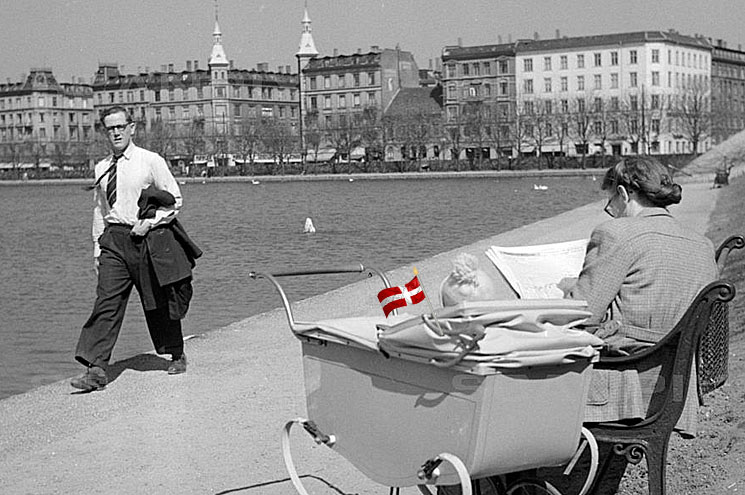
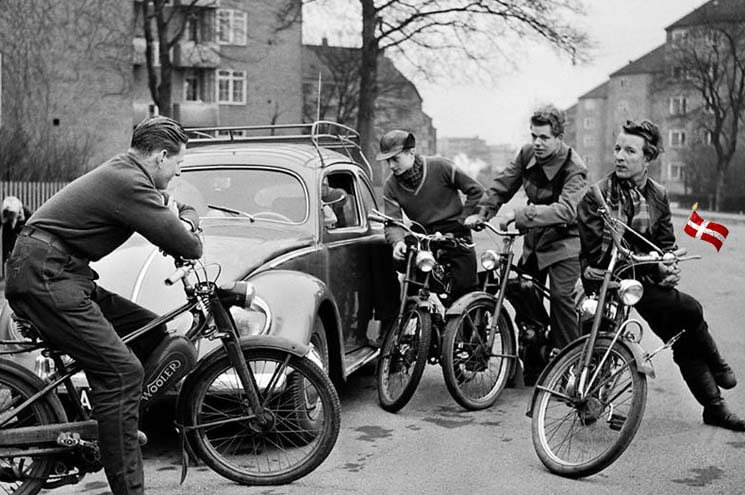
The Danish Flag: 800 years old and going out of style?

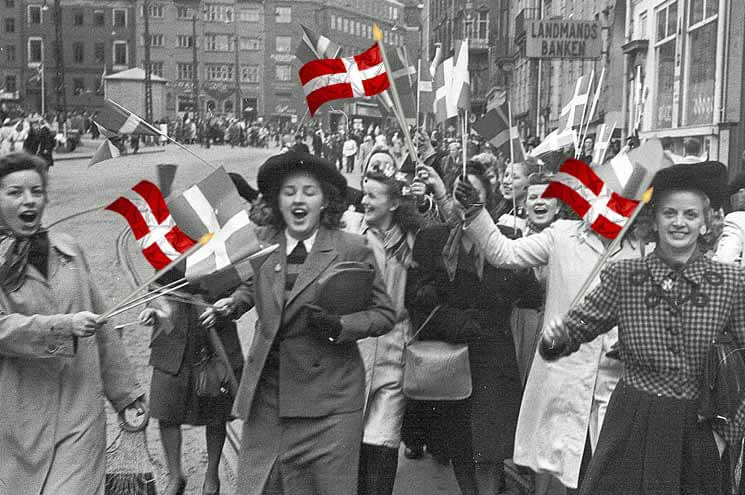
I’ve never seen a country that loves its flag as much as Denmark does – and that’s a big statement, coming from an American. But foreigners who come to Denmark can’t help but notice that the Danish flag is everywhere.

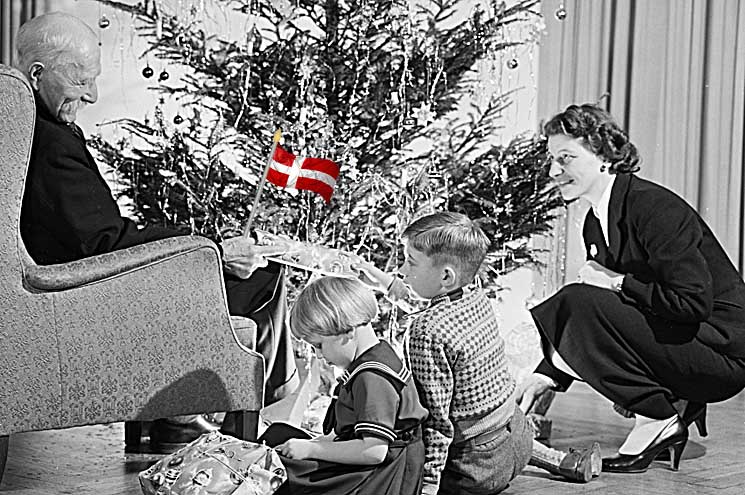
People love to fly Danish flags over their summer houses – the bigger the better. Christmas trees in Denmark are decorated with little Danish flags. Cucumbers in the supermarket have Danish flags on the label to show they’re grown in Denmark. Whenever a member of the Danish royal family has a birthday, two little Danish flags are stuck on the front of every Copenhagen bus.

The Danish flag is closely associated with Danish birthdays. If you have a birthday when you’re working in a Danish office, one of your colleagues is likely to put a Danish flag on your desk. It means – happy birthday! You may see a birthday cake with tiny Danish flags stuck into it, or the Danish flag recreated in red frosting.

And if you’re invited to a party by a Danish friend – any kind of party – you may find paper Danish flags stuck into the ground to guide you to the right house.

The Danish flag is not really a statement of nationalism. It’s a statement of joy.

I’ve never seen anyone say anything negative about the Danish flag – until a couple of weeks ago.
Continue Reading

Podcasts, Stories about life in Denmark

Danish gangsters: Night-time helicopters and the risks of a knit cap


If you live in Denmark or follow the Danish media, you’ll know there’s been a lot of talk of gangsters over the past week. One Danish gang is trying to expand at the expense of another gang, and this summer there have been about 25 shootings in Copenhagen, generally in the northern neighborhoods – my neighborhood.

Somebody was shot outside my supermarket, somebody else was shot outside the school near my house, and a couple of people have been shot just walking down the street.

Most of the victims are other gangsters, but a few have been unlucky civilians in the wrong place at the wrong time. All have been young men, and the Copenhagen police went so far as to suggest that young men stop wearing knit hats. Knit hats can be a gang sign.

I should point out that this summer in Denmark has been so cold that wearing a knit hat in August can actually seem like a good idea.

Continue Reading

Books, Stories about life in Denmark

Top 35 Mistakes Danes Make in English: The best-selling book

If you’re Danish or have friends or family who are Danish, you may enjoy my new book, “Top 35 Mistakes Danes Make in English.”

For the past 16 years, I’ve made my living at least in part by correcting Danish people’s English at big companies like Danske Bank and Carlsberg. And I run into the same mistakes again and again.

Confusing ‘fun’ and ‘funny.’ Mixing up ‘customer’ and ‘costumer’. Spelling ‘loose’ with two ‘o’s and ‘see’ with only one ‘e’. Confusing ‘learn’ with ‘teach’ and ‘loan’ with ‘borrow.’ And saying ‘meet’ to mean the time one starts work. “You must meet at 9.” Meet who?

This book is an attempt to put myself out of business.

Continue Reading

Podcasts, Stories about life in Denmark

Danes and Spring: Hot wheat buns and highly-educated drunks

 
It’s spring in Denmark, and spring is by far my favorite season here. The wonderful white Scandinavian sunlight is back after the dark days of the winter, the flowers are coming out on the trees, and everybody’s in a good mood. The outdoor cafés are full of people again – sometimes draped in blankets to keep warm, but outside all the same.

April and May are often the best months for weather in Denmark, along with September. Summers can be rainy. And April is when Tivoli opens in Copenhagen. (Side note: when you see a man in Denmark with his trousers accidentally unzipped, you quietly inform him “Tivoli is open!”)

Tivoli is one of the world’s great non-disappointing tourist attractions – it’s constantly updated, with new shops, new rides, fresh flowers and fresh restaurants. And in the spring, it’s not as crowded as it is in the summer. You can hang out all day, have a picnic, ride the rollercoaster, even hear some bands play.

Continue Reading

Podcasts, Stories about life in Denmark, Working in Denmark: Danish Business Culture

Job Hunting in Denmark Part 2: Putting together your Danish cv

I’ve applied for jobs in Denmark and been hired; I’ve also been the person doing the hiring and sorting through applications.

Here’s the truth: It’s really no fun on either side. On the applicant side, you can feel like a beggar, desperate for someone to recognize and reward your talent. It wears on your confidence, particularly in a long hiring process, which is common in Denmark even for Danes.

And on hiring side, you’re facing a huge stack of applications, mostly from people who know nothing about the company, nothing about the job, and are sending you a standardized letter or cv that gives no indication about why they’re a good fit.

For example, when I was hiring for a copyediting position at a financial company in Copenhagen, I got a letter in flawless English from an Eastern European woman who was a display artist at IKEA. She put together the sofas and pillows to give the imitation living rooms a chic and homey atmosphere. It’s noble work, but it had absolutely nothing to do with the job we had advertised, and she’d given no indication of how her skills would transfer.

Continue Reading

Podcasts, Stories about life in Denmark, Working in Denmark: Danish Business Culture

Looking for jobs in Denmark Part 1: Fine-tuning your approach to the Danish job market

I get a lot of email at How to Live in Denmark from people looking for jobs in Denmark, and I can spot definite patterns based on nationality.

Indians and Pakistanis, for example, tend to send me mails full of numbers and data: “I have 6 years of IT experience and an Msc in Chemical Engineering. What is my expected first-year salary and what will be my living standard based on that salary?”

Left-wing Americans like to pour out their frustrations at the capitalist excesses of their home country, and then ask how quickly they will be eligible for Danish social services like free college tuition. (One single mom from the U.S. had three children she was looking forward to educating at the Danish taxpayers’ expense).

Correspondents from Eastern Europe want to know if they really have to learn Danish, no doubt because in addition to their native language they’ve already had to learn English (which they generally speak well) and sometimes Russian or German.

Continue Reading

Podcasts

Donald Duck, Anti-depressants and the Myth of Danish Happiness


Whenever I hear that Denmark is the happiest country in the world, I think of Donald Duck.

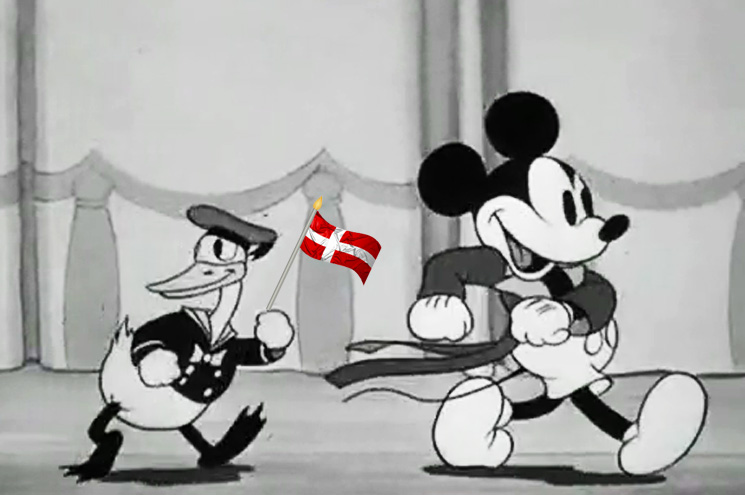
Donald Duck is extremely popular in Denmark, as he is in all Nordic countries. He is much more popular than Mickey Mouse. He even has his own Danish name – Anders And. Which means, basically, Anders the Duck.

I don’t know how much you know about Disney characters, but Donald Duck – or Anders Duck – is kind of a second-class citizen. While Mickey Mouse is the perfect gentleman, outgoing and take charge, the face of Disney, Donald is lazy. He likes to come up with clever ways to avoid work, or avoid any exercise whatsoever. He’s often short-tempered, and jealous of Mickey.

Donald Duck is an underdog, and Danes identify with the underdog. They identify with the idea of low expectations, and then being pleasantly surprised when things turn out well.

This is the secret to Danish happiness. While Americans might identify with bright, happy Mickey, there’s a lot of room for disappointment if your bright, happy plans don’t work out the way you hoped they would.

Continue Reading

Podcasts, Stories about life in Denmark

Danish Christmas #2: The cultural importance of the adult elf hat

I’ve been living in Denmark so long that I sometimes forget what it’s like not to live in Denmark. Specifically, I forget that in most countries, adult men and women don’t want to walk around in an elf hat, even at Christmastime.

Wherever alcohol is served
In Denmark, the red and white elf hat is part of any Christmas activity where alcohol is served, and even a few where when alcohol isn’t served. Children occasionally wear the elf hats, which are called Nissehue in Danish. At my daughter’s school pageant, the girls wear long white gowns and carry candles for the Santa Lucia procession, and the boys wear elf hats.

But you’re more likely to see an elf hat on an adult, quite possibly on your boss or your professor or somebody else you’re supposed to respect. Wearing an elf hat as a grown-up in Denmark is the way to show you’ve got a sense of humor about yourself, that you’re up for a party, that you see the fun in Christmas. Or, that you can see any fun in life at all after four weeks of nonstop grey skies and rain during Danish November.

Elf hats will be out in force during Danish corporate Christmas parties. You’ll see them on the dance floor, and quite possibly see two of them making out in the printer room. Danish corporate Christmas parties get pretty wild, which why furniture movers say their big season is December and January. One half of a couple misbehaves at the Christmas party, and the movers are there the next weekend.

Continue Reading

Stories about life in Denmark

The Two Months of Christmas in Denmark: Holiday drinking starts now

The 12 days of Christmas is an old French Christmas song. But those 12 days have nothing on the Danes, who have more than two months of Christmas, and would probably have it last all the way to spring if they could get away with it.

Little cookies in shops
If you’re here in Denmark right now, you probably saw the Christmas wrapping paper hit the shelves at Netto a couple of weeks ago. That, and the first of the gingerbread Christmas cookies. You’ll notice that a lot of Danish shops put out little dishes of brown Christmas cookies that look like overgrown M&Ms. Pepper nuts, they’re called.

You’re invited to take one, they’re free and they are very tasty. That said, you might not be thinking about all the other little fingers that have touched those cookies. I recommend buying your own pepper nuts and enjoying them at home.

Christmas beer bikinis
Anyway, the official start of the holiday is this week, November 6, when Tuborg rolls out its annual Christmas beer. It’s released at precisely 20:59, and everybody hangs out in bars waiting for it, some specially dressed in blue Christmas beer hats, Christmas beer neckties, or even Christmas beer bikinis.

Christmas beer tastes a lot like regular beer, a little bit sweeter, and a lot stronger. This is why a man I once knew, who was a bit of a wolf, told me that Christmas beer day was the best day of the year to ‘score’ with married women. The beer is very strong.

Continue Reading

Dating, Podcasts, Stories about life in Denmark

How to date a Dane: The two-speed bicycle and the flexible word

My Danish friends who are about to spend some time in the U.S. often ask me for advice about surviving American culture, and I give them all the same two tips.

First, in the U.S. it’s a good idea to be polite to police officers. Danish cops often come from the countryside and have funny rural accents and since Danes generally don’t like hierarchy and authority anyway, they have no problem being sarcastic and a little smart-ass with a police officer.

That doesn’t work in the States. That Highway Patrol lady with the mirrored sunglasses who has just caught you speeding down Route 66 is unlikely to have much of a sense of humor. If she pulls you over, say “yes, ma’am” and “no, ma’am” a lot and keep your hands in view at all times so she can see you’re not reaching for a gun.

That’s the first tip. The second tip is that, should you go to a bar, it can happen that a stranger or two will offer to buy you a drink. If the stranger is of the opposite gender, or same gender depending on the bar, that person is interested in you. Let them buy you a drink. And chat with them while you drink it. If there’s no chemistry, when the drink is finished, you can both go your separate ways.

That’s a little shocking for Danes. Buying a drink for someone is a big deal in Denmark, a place where a loving couple who go out for a romantic candlelight dinner often split the bill. For Danes, buying someone a drink is like buying them a birthday present. Many Danes are not comfortable with a stranger making that level of commitment.

Continue Reading