
I occasionally work with small children in Denmark, one of my many side gigs, and on a recent rainy afternoon, I taught a couple of boys how to play tic-tac-toe.
This simple game of putting marks in a 3 by 3 grid may seem dull to adults, but to a four year old who has never seen it before, it’s a revelation.
The strategy! The many ways you can win! It’s an ancient game that can still be fascinating to someone born in 2022.
Tic-tac-toe is played all over the world under various names – it’s noughts and crosses in Britain, it’s maru-batsu (“circle-cross”) in Japan.
And in Denmark, it is kryds og bolle, crosses and buns.
Buns, bolle, are the basis of a Danish breakfast.
Bolle not bølle
And remember to always say bolle, which means bread roll, and not bølle, which means bully.
That confused me for many years, as did slang term at bolle, which is a vulgar term for sex.
(Princess Isabella, the 19-year-old royal rebel, recently appeared at a music festival with a band t-shirt that said Bollede ham i går, I slept with him last night, with a big arrow pointing to the right.)
BMO is a bun with cheese
Anyway, the bread version of bolle is the basis for most Danes’ breakfast.
Danes are not fancy breakfast eaters. The first meal of the day is either a bolle with cheese, known in trendy terms as a BMO, or bolle med ost, or some oatmeal.
A visiting American recently asked me where he could go out for breakfast, since of course we Americans have elaborate breakfast restaurants, and the only place I could send him was Grød, a specialist oatmeal chain.
Getting breakfast from a bakery
Many Danes will get their breakfast from a bakery.
Perhaps a nice fresh loaf of sourdough for slicing, or one of the many types of bolle – maybe a rundstykke, or round piece, a nice crunchy wheat roll. They might get one of the newer types of bolle, like a müslibolle.
Or they might get Danish rye bread, rugbrød, that dense, delicious taste of Denmark every Dane misses most while living abroad.
On a Friday or a weekend, they might pick up a few sugary Danish pastries, known as wienerbrød, or Vienna bread. Cinnamon snails, kanalsnegle, or cardamon buns are popular with all ages.
Bakeries were dying
Fifteen or twenty years ago, bakeries in Denmark seemed to be dying.
They couldn’t find staff. Nobody, it was said, wanted to get up in the middle of the night and make bread.
The few bakeries that were left tended to have dirty windows and sour service and offer stale, dusty pastries.
Most Danes made their breakfast bolle at home or got frozen buns from the supermarket or gas station.
I remember a text about gas station buns at one of my early Danish language textbooks.
Destination bakeries
But the trend has turned, and bakers and bakeries are now some of the hottest businesses around.
People will wait in line outside the Juno bakery in Copenhagen, or Bakeria in Helsingør. These are destination bakeries.
And this is not just a big city phenomenon. There are craft bakeries all over Denmark. This year’s Best Bakery contest has 80 nominees from Aalborg to Rønde to Jyderup to Karrebæksminde.
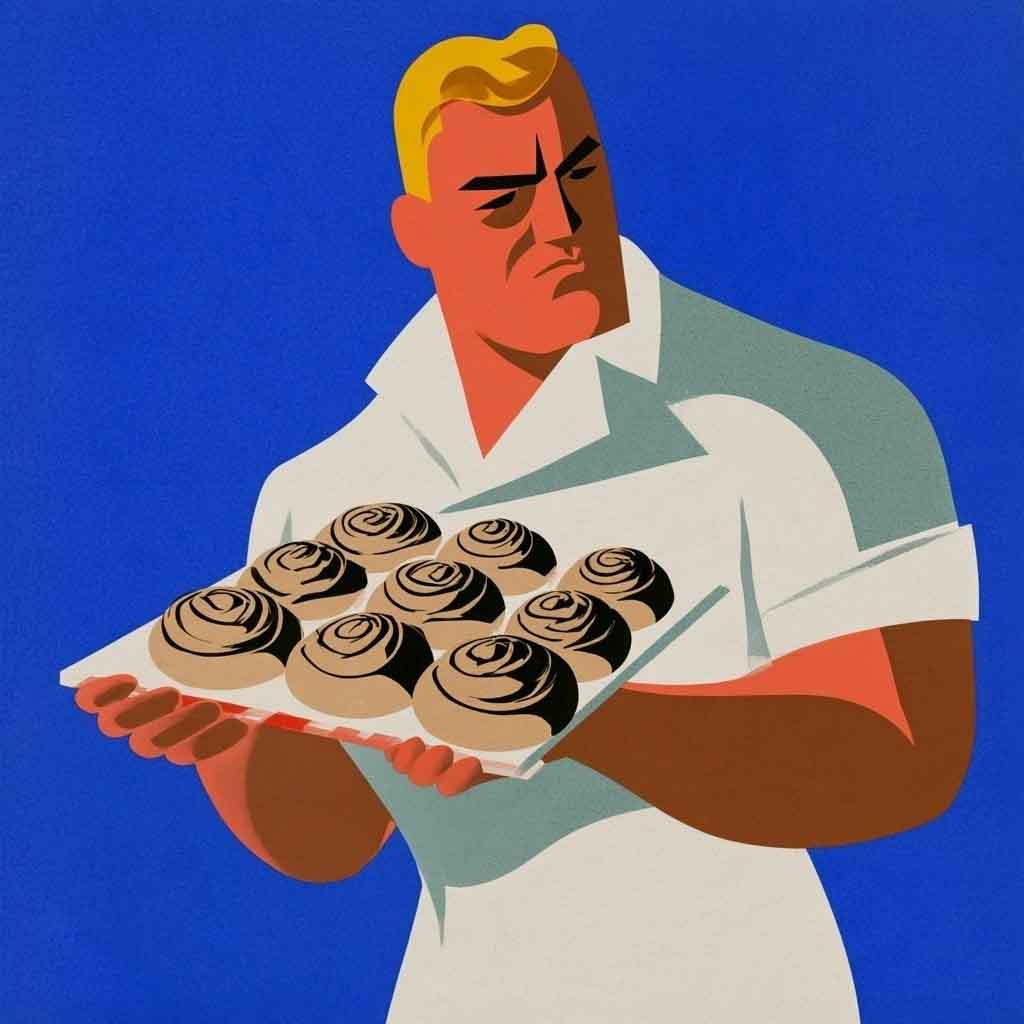
Baking is macho in Denmark
Perhaps it is a coincidence, but the trend turned when baking became a rather macho enterprise in Denmark. Claus Meyer was the pioneer, with his Meyers Bageri.
Baking became a way for Danish men, who are generally gentle fellows, to show their creativity and skill. This is a culture that respects craft and handiwork, whether it is furniture making or beer brewing or silversmithing, or producing a beautiful bun.
An acquaintance of mine recently ran a baking course for teenagers, and all of the sign-ups were boys.
Fancy craft bakeries
Many of these men go on to create fancy craft bakeries, where a complex bun or piece of cake can cost an absurd amount.
These bakeries reflect the confidence and prosperity of Denmark at this time in history.
Thirty or forty years ago, this was not a country where people had a lot of disposable income. Now it is.
Buns are still an equalizer
Yet the Danish bolle, made with yeast and flour and water, is still an equalizer.
Everybody can afford the most simple version, which usually costs less than 20 crowns, and everyone with an oven can make them at home.
Even you, wherever you are.
They’re hard to mess up. You just have to give the dough enough time to rise.
That means that baking bolle is something someone of any age can enjoy, just like tic tac toe.