
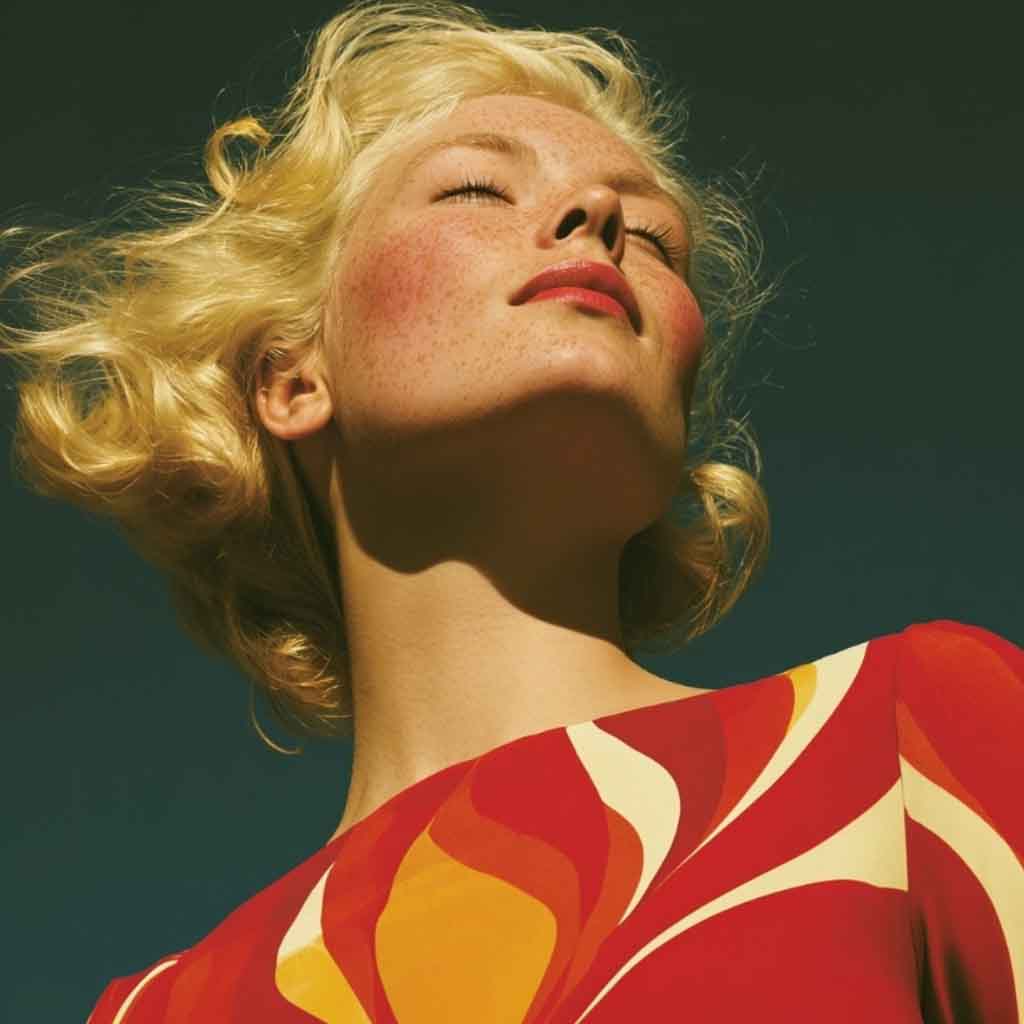
These are the light times in Denmark. In summer, it’s light until around 10 or 11 in the evening and then the sun is back around 4am.
It’s a nice contrast to the dark times in winter, although all that light can make you feel a bit jittery and overstimulated.
It’s also one of the few times a year that the Danes close their curtains. They do that so the first rays of sunshine won’t wake them up at a painfully early hour.
At other times of the year, the curtains to homes and apartments are often wide open, and visitors to Denmark are sometimes surprised that they can see right into people’s homes as they eat dinner or watch TV.
Keeping curtains open makes sense for the darker times of the Danish year when you’re desperate for as much sunlight as possible. But it’s also a sign of confidence in who you are and what you are presenting to the world, that you have nothing to hide. This is me. This is who I am.
Warts and all
Authenticity is a basic Danish value, just like trust and transparency and having a sense of humor about yourself. Denmark is not a status culture, it’s not a place where you fake it until you make it. It’s a place where you’re expected to present yourself warts and all.
And I mean that literally. One of my first experiences with Danish culture, on a plane from New York to Copenhagen, was when I opened Danish magazine to an image of a lady fashion designer, middle-aged, apparently unretouched.
The woman had significant crows’ feet and an unfortunate wart, and the magazine had just left them there, when they could easily have been retouched away. But that was authentic.
Off angles, awkward body positions
I learned later in life, when I was appearing in the media myself, that nobody wanted to retouch me either. And I really could have used it.
Danish media doesn’t like to feature images of people just standing there and smiling. They specialize in off angles, awkward body positions, strange facial expressions, bad lighting, a little roll of fat.
They believe this makes the photos authentic, believable, trustworthy. Or as the Danes would say, not too opstillet or set up.
Scroll through a Danish newspaper like Berlingske or Politiken, and you’ll find a lot of photos of Danish people looking slightly uncomfortable. That’s the style.
Roots in the Lutheran religion
This preference for authenticity has very old roots in Denmark.
Like many things in contemporary Danish culture, it can be traced to the Lutheran religion that was once universal and is still the official state religion, with King Frederik as its head.
The Lutheran faith is focused on a direct relationship with God, as opposed to symbols and rituals. Even the philosopher Søren Kierkegaard championed an authentic existence before God.
If you visit a Danish church that was built to be Lutheran – not one of the converted Catholic ones, but actually built to be Lutheran – you’ll notice they are very plain inside.
The message is religious sincerity, honesty, equality, unpretentious living, authenticity.
Plain-spoken
This is why Danes are often plain-spoken, sometimes shockingly so. In the office, they may say directly, “I don’t have time to help you with that.” Socially, you might mention your fun new hobby, and they might say “I’m not interested in that.”
This can be a little surprising when you first hear it, but it saves time, and it’s what the Danes expect.
If you try to give an unwelcome message politely and indirectly, as is expected in many cultures, Danish listeners may not understand what you’re getting at.
A visit to Kolding
But Danish authenticity also has its lighter side. I recently gave a speech in Kolding, which, I learned, is the 8th biggest city in Denmark – Copenhagen, Aarhus, Odense, Aalborg, Esbjerg, Randers, Horsens, and then Kolding.
And I stayed at the Hotel Kolding.
The Hotel Kolding, which is a perfectly fine but modest hotel, had framed some of its Tripadvisor reviews on the wall. Both the positive ones and some that were less positive.
So right next to a proudly framed five-star review that says, “The breakfast was phenomenal” you’ll see a less enthusiastic review saying “The beds were horrible. I stayed for two nights, didn’t sleep for two nights” or “The corridors are stuffy and reminded me of a hospital.”
Or even “The staff was very nice. While I went out to see the city, they took care of my hamster.”
Authentic. And it shows how the hotel management has a great sense of humor about itself, which is rather welcoming for the weary traveler.
The Danish summer light
It’s easy to have a good sense of humor at this time of year, the light times in Denmark, with the trees covered in fresh green leaves and the flowers in bloom.
Of course, it’s Denmark, so you don’t get sunshine every day.
When you do get sun, remember to take the classic Danish sunlight position: eyes closed, chin lifted, face turned to the sun, to the warmth, to the light.