Browsing Tag

danish culture

Danish culture is a complex animal, a mixture of old traditions and modern expectations from the welfare state. Paying high taxes to finance the welfare state is an integral part of Danish culture, as is a strong sense of equality and quiet resentment of the elite.

Danish dinner party customs, image by Kay Xander Mellish 2026
Podcasts, Stories about life in Denmark

Danish dinner party customs, and why it’s OK if you break your Royal Copenhagen dishes

Some might say that the most Danish piece of furniture is the chair. The Swan Chair, the Egg Chair, the Wishbone chair. They’re all international design classics. You can buy a poster with 100 of the top Danish chairs, and if you go to Designmuseum Danmark there is a hall of chairs you walk through, the display cases stacked three high. Chairs, chairs, everywhere.

But I think the most Danish piece of furniture is the table. It is where traditional Danish cuisine is enjoyed, and sitting around the table, and sitting and sitting and sitting there for hours after a long meal, is where hygge reigns and people are included – or excluded, as the case may be.

Continue Reading

Danish movies and TV
Books, Podcasts, Stories about life in Denmark

Danish Movies and TV as a Guide to Danish Culture

Watching movies and TV is a great way to get through the long Danish winter, and if you watch Danish movies or TV series, it’s also a great way to learn Danish or learn about Danish culture.

Many newcomers to Denmark tell me they’ve been watching recent shows, like Borgen or The Bridge or The Killing. Or maybe movies like Another Round, which won an Oscar for Best International Feature, or The Hunt, both of which star Mads Mikkelsen, Denmark’s most recent contribution to the world of movie stars.

I saw Mads at the Copenhagen Opera recently, just standing by himself in the lobby with a glass of champagne, no one bothering him.

When you start watching Danish films, you’ll probably want English subtitles, but as your knowledge of Danish grows, it’s great to try out the Danish subtitles. That will help you bridge the gap between spoken Danish and written Danish, which don’t always resemble each other if you’re not a native speaker.

Continue Reading

Denmark's National Day
Podcasts, Stories about life in Denmark, The Danish Year

June: Danish pride, women in uniform, and the reverse Jante Law: The Danish Year Part 6

I’ve referred to “The Danish Year” before on How to Live in Denmark. It’s a series of events that are simply expected to happen every year in Denmark, even if they aren’t formal holidays. This year I’m going to try to do a podcast every month about aspects of the Danish year, and how they fit into the overall context of where Denmark is coming from, and where it’s going.

June is a glorious month in Denmark, the sun has arrived but the mosquitos haven’t, and it is full of special days, from graduations to weddings to the midsummer festival of Sankt Hans, where Danes meet to sing traditional songs before a giant bonfire.

Danes love a good bonfire, and kids are generally introduced to them in kindergarten, where small children gather around the big open flame in their play clothes.

The Danish National Day

June also includes the closest Denmark gets to a national day, Constitution Day. The Danes are modest about this, there are no parades or fireworks or military fly-bys. A few politicians make speeches about how important the Constitution is, but many people don’t even get a day off work. And the Constitution has to share the day with Father’s Day in Denmark.

Continue Reading

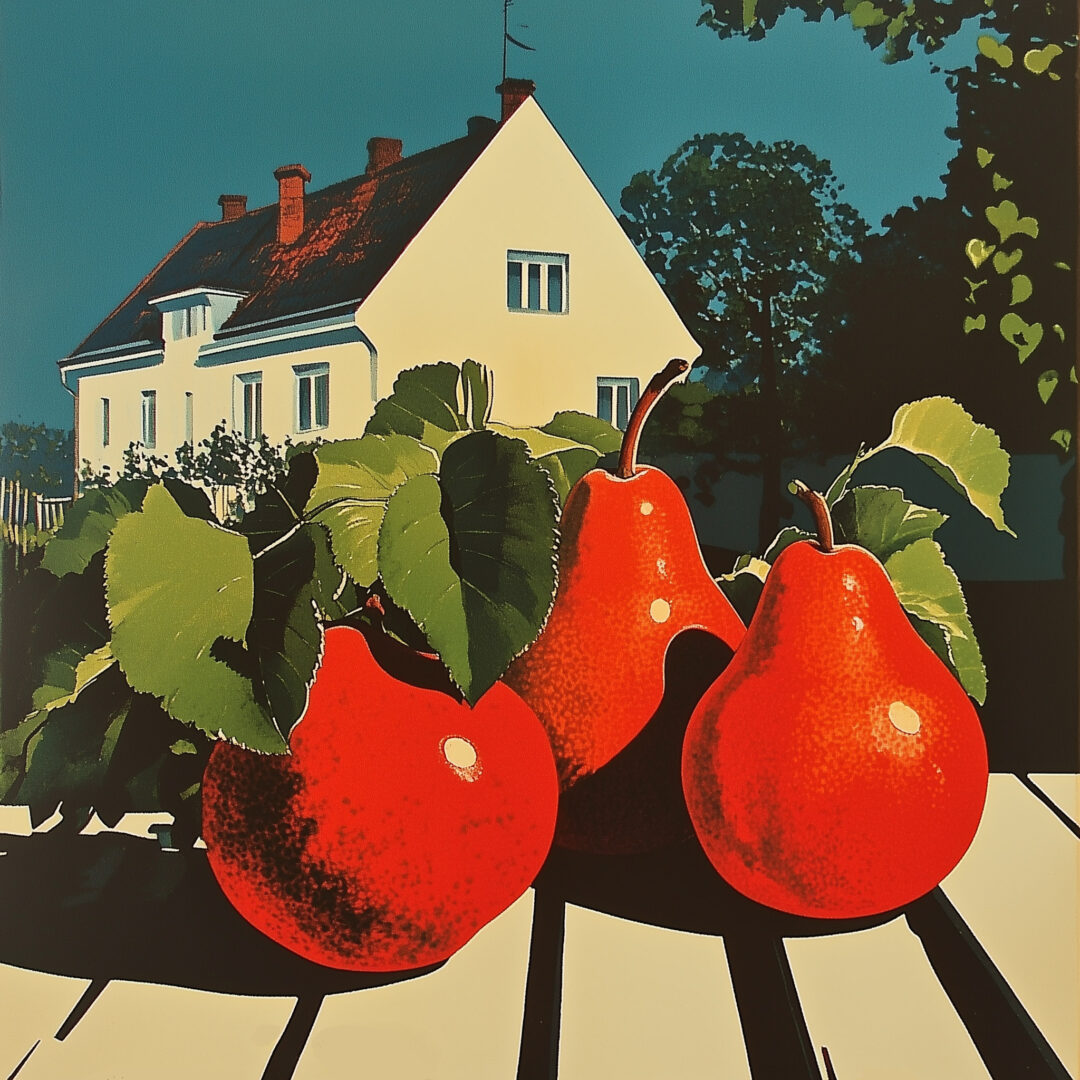
Paerdansk Pear Danish by Kay Xander Mellish
Podcasts, Stories about life in Denmark, The Danish Year

April, Gardening in Denmark, and what it means to be “Pear Danish”: The Danish Year Part 4

I’ve referred to “The Danish Year” before on How to Live in Denmark. It’s a series of events that are simply expected to happen every year in Denmark, even if they aren’t formal holidays. In 2025 I’m going to try to do a podcast every month about aspects of the Danish year, and how they fit into the overall context of where Denmark is coming from, and where it’s going.

As the long Danish winter finally draws to an end, it’s time for Danes to start planting their gardens.

Now, in early April, it’s rhubarb, parsnips, cabbage. After the risk of frost is gone, in late April, you can put down some beets, and chives, and parsley – all good traditional Danish food.

By May, you can try with the tomatoes, which may or may not ripen depending on whether you get a warm, sunny summer, always a roll of the dice in Denmark. One year we ended up with hard, green tomatoes in September.

The growing season in Denmark is short. If you miss the planting deadlines, you’re probably out of luck.

And even if you are in luck, the amount you spend at the garden center will far outstrip the amount it would take you to buy the same foods at the corner market.

Names that include “gaard”

But Danes love to garden, they love to touch the Earth. Denmark industrialized fairly late compared to the rest of Europe – really not until the late 19th century – and even then it focused on cooperative agriculture for export. Denmark is still known around the world for its butter and bacon.

Many Danes still carry the name of their family farm in the name they use today.

The Danish word for farm is “gaard”, so the names of jewelry designer Ole Lynggaard, or golfer Nicolai Højgaard, or politician Pia Kjærsgaard, all reference what was once the family farm, the “gaard”.

Continue Reading

Podcasts, Stories about life in Denmark

Learning Danish through song lyrics

One of the first gifts I received in Denmark was a CD by a singer called Carsten Lykke. “I think you’ll like this,” said one of my first Danish friends.

And I did – even though I didn’t speak much Danish at the time, Carsten Lykke’s lyrics made me laugh. A small, awkward guy, who was at that time best known as the leader of a Blur or Pulp-style band called the Ibens, Carsten’s solo work mostly involves him making fun of himself and his treacherous relationship with his mother.

His big hit involved a fantasy of being married to then-Crown Prince Frederik (“If Frederik was into men, I’d be Queen right now”) He’s willing to laugh at the Danish Jante Law, the unwritten rule against celebrating status or success, with songs like “I burde gi’ mig bank“, the chorus of which is, “I’m so successful, you ought to punch me.”

At any rate, I learned a great deal of colloquial Danish from that CD, so much I didn’t realize it until Carsten Lykke, now in his mid-50s, put out a new single earlier this year. I cued up all his old stuff again.

I still remembered almost every line.

Find a Danish lyricist you enjoy

That’s why one of the tips I give to newcomers in Denmark is learning Danish through song lyrics. Find a Danish lyricist who writes songs you enjoy listening to, again and again.

Continue Reading

Podcasts, Stories about life in Denmark

Equality and the Electric Bike

When I first arrived in Denmark, you could shut down any dispute in Denmark by appealing to the common good. Solidarity – solidaritet– and fælleskab, or community, or even samfundssind, societal spirit.

These were magic words, and they still are, particularly with the older generation that built Denmark’s welfare state. If you want to convince this generation of anything, just make a reference to solidarity and community and societal spirit. Works like a charm.

What about “Jante Law”?

I’m often asked if the younger generation is as dedicated to these principles as their elders, and if they still follow the Jante Law.

Jante Law is not really a law – it’s like a legend, in which people living in Denmark are not supposed to act like they’re better than anyone else, or smarter than anyone else, or know more than anyone else.

This, of course, is tricky if you actually are better than someone else, or smarter than someone else, or know more than someone else. But the idea is, don’t try to speed ahead of others. We all move at the same rate.

Young people aren’t too keen to put up with that, in particular in an environment where they are competing internationally.

For many Danish young people, the idea that all Danes are equal and we must all move together, at the same pace, seems outdated.

And one contemporary example is the rise of the electric bike.

Continue Reading

Stories about life in Denmark

What newcomers to Denmark ask me

When you’ve been an international in Denmark for a while, as I have, you sometimes forget what it was like to arrive here for the first time and know nothing.

I remember arriving just about this time of year and being astonished by all the public holidays in spring. I’d arrived to work, but the office kept shutting down.

Now one of my various gigs is cultural training for newcomers, paid for by the big corporations that bring them here. The questions they ask bring me back to the time when I first arrived.

One of the most popular questions is pretty basic: How do I send a letter in Denmark? What does a postbox look like? Where do I buy a stamp?

Postbox Red

First of all, you can buy a stamp through your phone. Denmark is a highly digitalized society, you rarely use cash for anything, and you can pay to mail your letter through an app. It will give you a nine-digit code that you write in the space where the stamp usually goes.

Then you drop it off in one of the red postboxes that can still be found around Denmark, even though the Swedes took over the postal service a few years ago and repainted everything else to do with the post office Swedish blue, including the carriers’ uniforms.

The red post boxes survived, maybe out of nostalgia. You will frequently hear Danes describe a color as “postbox red.”

The Swedes also sold off all the good real estate that Denmark’s post offices used to occupy, so Denmark doesn’t have post offices any more. If you want to send a package that can’t fit in the postbox, you take it to a special counter in one of the big supermarkets.

Continue Reading

Stories about life in Denmark

Moving to Denmark, a Guide for Americans

Moving to Denmark as an American has become a hot topic recently; I hear a lot from Americans interested in immigration to Denmark.

Since I’m selling books called How to Live in Denmark and How to Work in Denmark, you’d think I would encourage as many Americans as possible to look into Denmark immigration.

But moving to Denmark with a U.S. passport isn’t as easy as just buying a plane ticket and a lot of sweaters.

Continue Reading

Podcasts, Stories about life in Denmark, Uncategorized

Dining in Denmark

Unlike the Norwegians, Swedes, and some Germans, the Danes don’t show their cultural pride by dressing up in 19th century folk costumes. (As a matter of fact, the first time I ever saw a Danish folk costume was at a festival in California.)

Instead, Danes express their cultural pride through food.

When visiting Denmark, you’ll be offered Danish cuisine, and expressing enthusiasm for it will go a long way towards generating harmony with your Danish friends.

Flæskesteg, Denmark’s national dish
The good news is, dining in Denmark offers something for everyone.

If you’re a carnivore, don’t miss the Danish pork dishes, particularly flæskesteg. That’s a crispy, fatty fried pork that’s often called Denmark’s national dish, served with sugary caramelized potatoes and braised red cabbage.

For people who prefer fish, there’s a great selection in this country surrounded by water.

Continue Reading

Denmark and the USA, Stories about life in Denmark, Working in Denmark: Danish Business Culture

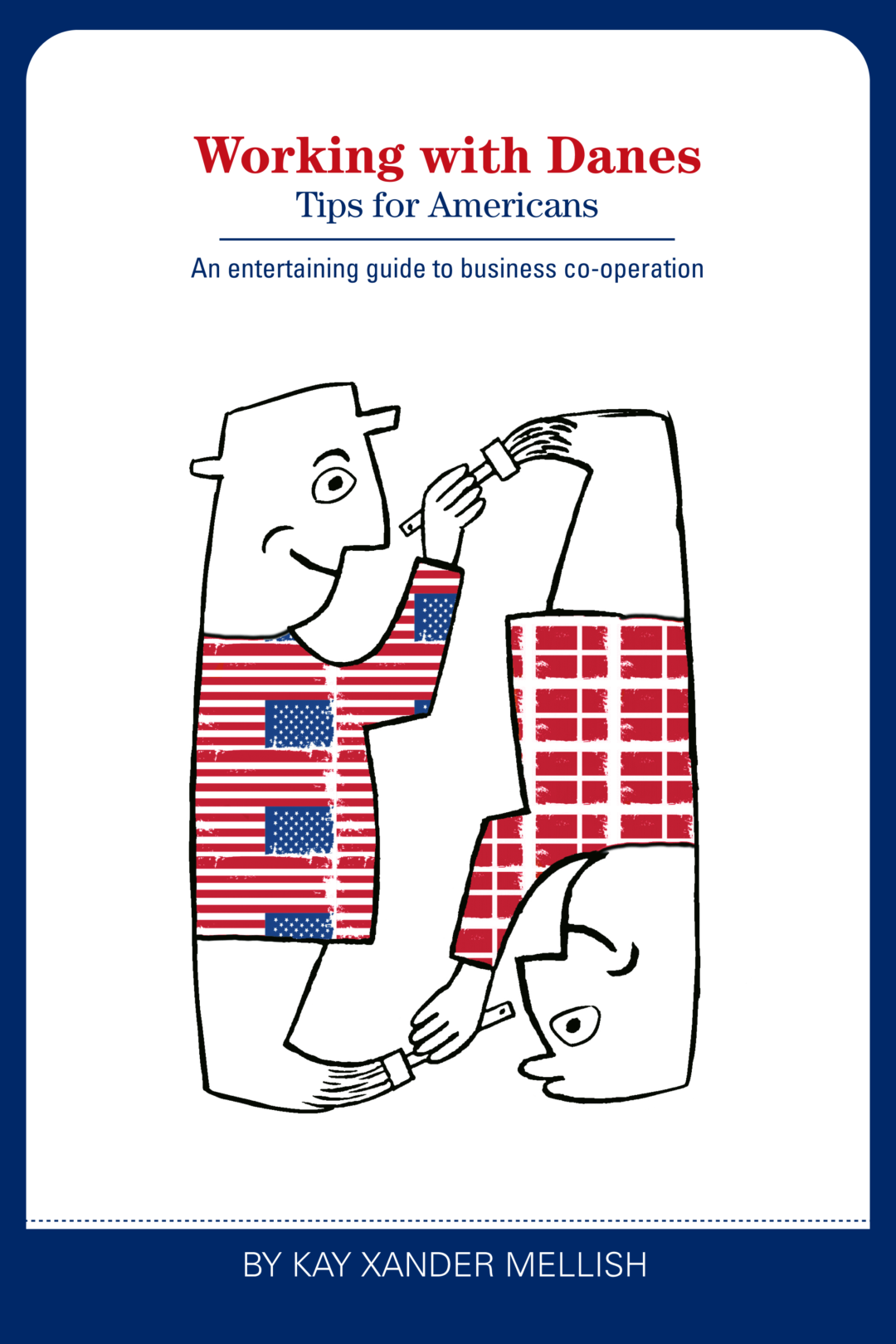
Working with Danes: Tips for Americans – Get the book!

Working with Danes: Tips for Americans, Kay Xander Mellish’s new book, is now available in print and eBook form.

Denmark is a great place to do business. Infrastructure is superb, corruption minimal, and the Danes sincerely enjoy a good business deal.

Yet when Americans arrive with their burning ambition and enthusiasm, they sometimes experience tensions with the modest, calm, practical Danes.

This book is a companion volume to last year’s popular book, Working with Americans: Tips for Danes.

Working with Danes: Tips for Americans covers aspects like:

📘 Two words to better understand your Danish colleagues
📘 The sacred value of time
📘 Danish names
📘 Flexicurity and unions
📘 Americans, turn down the volume!
📘 Selling to Danes
📘 The Danish calendar, and holiday weeks to avoid
📘 Managing Danes
📘 Jante Law, and why Danes sometimes underplay their skills
📘 Rating systems, and why Danes and Americans rate things differently
📘 Denmark is not just Copenhagen
📘 Differing concepts of privacy
📘 Gender equality in Denmark
📘 Danish meetings
📘 Don’t say “let’s have lunch” unless you mean it

And much more.

The book also includes tips on dining, driving, and diversity in Denmark, plus tips on what to wear, how to give gifts, and why someone might put a Danish flag on your desk on your birthday.

It also includes a short section with ideas for how to prepare for long-term stays in Denmark.

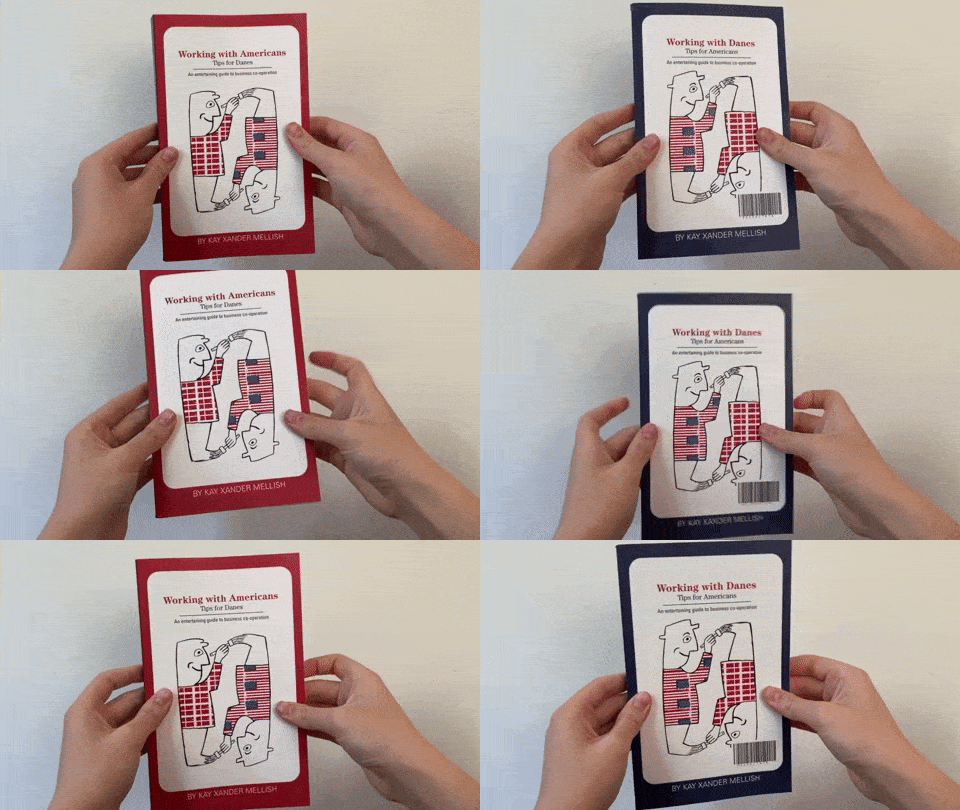
Flip Book Working with Americans Working with Danes

You can get this book and all of Kay Xander Mellish’s books, including the flip book Working with Danes: Tips for Americans/Working with Americans: Tips for Danes on our webshop, or at Amazon, Saxo, Google Books, Apple Books, Barnes & Noble Nook, or via our webshop.

Or follow Kay on LinkedIn.