Browsing Tag

alcohol

Alcohol and Danish culture are closely linked: alcohol is part of almost every social occasion in Denmark. If you’re a non-drinker in Denmark, you may have difficulty socializing. My tip is to find out who is driving home after the party and hang out with them: they can’t drink any alcohol either.

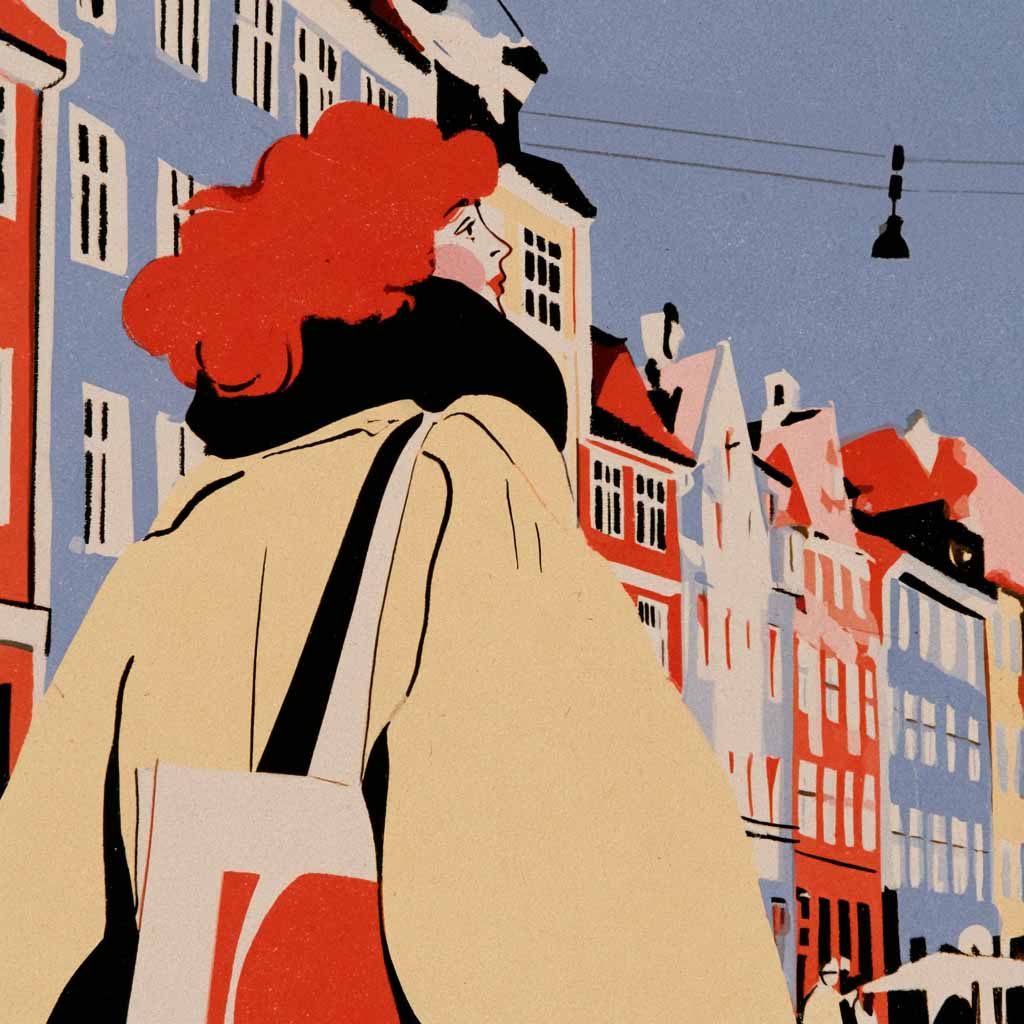
newcomers to copenhagen, made with Midjourney by Kay Xander Mellish
Podcasts, Stories about life in Denmark

13 Quick Tips for Newcomers to Copenhagen

Since I’ve lived in Denmark for some time, it can be hard to get in the headspace of a newcomer.

But that was my assignment recently when I spoke to a couple of hundred new students at the University of Copenhagen, who had just arrived in Denmark the day before.

I thought that some of these tips might be useful to you, my podcast listeners.

So here we go, lightning round, word association style.

Get an ugly bicycle in Copenhagen

Bicycle. When you arrive in Copenhagen, get one quickly, and get an ugly one. Don’t get a fancy one that is exciting to thieves. Denmark has a bicycle culture, but it also has a big bicycle theft culture.

A good option is a second-hand bike, but get it someplace legit, because if you get it from some random online you might find yourself riding someone else’s stolen bike.

Biking gives you freedom, it can take you anywhere at any time in any season in Denmark. And if you don’t know how to ride a bike, the Danish Red Cross has free classes for adults.

Yes, you do have to pay for public transport in Denmark

Transport tickets. There are no fare gates on the Danish metro or bus or train. You’re just trusted to buy a ticket.

However, there are controllers that go around and check, and if you don’t have precisely the right ticket when they check you, you will get a big fine.

Don’t bother with a dramatic story about how you didn’t understand the ticket system because you’re an innocent child from a faraway land.

Don’t cry. It doesn’t work, I’ve tried.

Keep your dignity, pay the fine, and then if you think it’s unfair, email the transport company. You can often get the fine reduced, in particular if it’s your first fine.

First names only in Danish culture

First names only. In Denmark, everybody goes by their first name. That includes university professors, bosses, priests, schoolteachers, doctors, even the prime minister. Mette. Mette Frederiksen.

Nobody uses Mr or Mrs or Doctor titles.

This is also true for older people. You don’t have to address them as Ma’am or Sir or Aunty or any of the other forms of respect common in other cultures. Just their first names – it’s what they want.

Always be on time in Denmark

Time and trust: Being on time is a big part of building trust in Denmark. A 10am class really is a 10am class, a 2pm meeting really is a 2pm meeting, and even for social events you have to be on time.

If someone invites you for dinner at 7 you really have to be there at 7.00.00. Otherwise your food will be cold. None of this turning up fashionably late.

And if you say that you’re going to be someplace, you really do have to turn up, or the Danes will be heartbroken. They were counting on you.

Splitting the check on a date in Denmark

Dating. Dating in Denmark is very egalitarian. The check is usually split in half. If it’s a male female date, the man may offer to pay, the woman might say no, and that doesn’t mean the date is a flop. People just like to be equal.

In general, Danes can be prickly about someone else picking up the check in a restaurant, even with friends – they do not want to feel obligated. Usually everyone splits the bill.

The exception is your birthday, when you pay for everything.

How to party if you don’t drink alcohol in Denmark

Drinking. Not all of Danish social life still centers on alcohol, but a lot still does. If you don’t drink alcohol , I’d recommend going to parties and Friday bars anyway and having elderflower juice, hyldeblomst. It’s a local favorite, light and sweet with zero alcohol.

You can also have what they call danskvand, or Danish water, that’s just plain water with bubbles in it. Put in a lemon or lime, it looks like a cocktail, nobody’s going to ask you any questions.

If you do drink alcohol, beer is generally pretty cheap in Denmark, wine less so, and cocktails very expensive. It’s common for a group of friends to drink at home before they go out to save money. (The Danes call it warm, in other words, warming up to a night on the town.)

Saving money in Copenhagen

Saving money. Restaurants and cafés and takeout are all very expensive here, so you’ve got to learn to cook for yourself or you’ll go broke. Look for items in supermarkets with yellow labels. Yellow is the color of discounts in Denmark.

Supermarkets often cut the price on food the day before it goes out of date. If you eat meat, you can buy a lot of this discount about-to-expire meat, freeze it, and eat it whenever you like. (I also recommend the app To Good To Go which offers discounts on “surprise bags” of bakery products, sushi, and other about-to-expire food as an initiative to avoid food waste.)

One thing you cannot do here is negotiate a discount at the supermarket checkout, and yes, I have seen people try. Flea markets, yes, supermarkets no.

You’ll notice that many of the staff in supermarkets are under 18. That’s because employers are legally allowed to pay young people less.

Your doctor in Denmark

Your doctor. Every person in Denmark legally gets to choose a primary care doctor, this is the famous tax-funded universal care. The doctors are self-employed, they own their clinics, but they are paid by the government, you don’t pay to see them.

What you do have pay for is medicine. If you need a prescription, they’ll send it electronically to a central system and you can pick it up at any pharmacy in Denmark, the price is the same everywhere.

That said, Danish doctors are often reluctant to prescribe medicine, in particular sleeping medication and antibiotics. These are t ough to get.

When you need someone to talk to in Denmark

Mental health. It’s August, it’s the light times, now is the time to start finding friend groups and activities, because the dark times are on their way. You do not want to be sitting all alone in your room during the dark times – November, December, January, February.

If you’re in Denmark and feeling alone and desperate, and the wait to talk to your doctor or to a free public counselor is too long, you can always make an appointment with a Danish priest.

Now, don’t freak out. You don’t even have to be a Christian! In the Danish state church, the priests are often middle-aged women. They’re not going to wear a funny outfit or talk too much about Jesus. They’ll just listen to you.

If you really need someone to talk to, a Danish priest from the state church is available in every neighborhood in Denmark. It’s fast, and it’s free. Don’t wait.

(Find your local branch of the state church in Denmark here.)

Hanging out with the Danish Royal Family

The Danish Royal Family. They are not big celebrities like the British Royal Family, you will see them walking around, especially in Copenhagen. I remember when I first got here looking through the window of a hair salon and seeing the then-Queen getting her hair washed.

If you’re a young person like the people in my university audience, you might see Crown Prince Christian, the future king, out having a few beers. He’s 20, whatever, he likes beer. Same for his sister, who is 19 and currently in the Danish Army. When she gets a break she probably likes some beers as well.

If you’re single and heterosexual, keep in mind that Danish Royals always marry foreigners, never other Danes. The current King married a woman from Australia, his Mom married a Frenchman, his grandpa a Swede, his great-grandpa a German. So you have a chance.

Quiet, taxis, gifts in Denmark

Quiet. Denmark is a quiet country. You might be on a bus or a train FaceTiming with a friend at home and see a Dane looking at you in a disapproving way.

You might think it’s because you are a foreigner, and that could be true, but it could also be because you’re loud.

With the exception of those drunken Friday bars, this is a quiet country.

Listen to the traffic: there are almost no horns honking. Most Danish trains have a “silent car” where no one is allowed to talk or play music.

Danes like peacefulness. If you are loud, voice loud, music loud, TikTok on your phone with no earphones loud, any type of loud, you are going to get funny looks.

Taxis. Taxis aren’t as common here as they are in many other big cities, because public transport is reliable and clean and used by every social class. And taxis are expensive.

You can’t really call a taxi by raising your arm like you do in Hong Kong or New York City.

You have to go to a taxi stand or call a taxi to where you are, or use the local taxi app. And the local version of Uber is just another version of the local taxi app.

If you absolutely must use a taxi, perhaps if you have a lot of luggage, use the fixed price option in the app. This will help you avoid getting an unscheduled tour of the city.

Gifts. In many countries, gifts are a social cue and and important part of doing business, but not in Denmark.

You should never give your professor or your boss flowers or candy or any other kind of gift. They’ll be very uncomfortable if you do. They see it as a form of corruption, which is not OK in Denmark.

You also should not offer money to university administrators to get what you want, such as a better housing assignment, or to municipal officials or immigration staff to get them to bend the rules.

They will be angry if you do. This is not the Danish way.

Podcasts, Stories about life in Denmark

Drugs in Denmark

When it comes to drugs, Denmark’s approach is inconsistent. Getting illegal drugs doesn’t seem to be too difficult, but getting legal drugs can be.

Hashish, which is illegal in Denmark, was until recently easy to procure at “Pusher Street”, in the so-called Free State of Christiania in Copenhagen. Christiania is one of the tourist attractions of Copenhagen.

This old military base, which was taken over by hippies during the 1970s, is a unique place, with dirt roads and ramshackle wooden buildings put together with odds and ends and some gorgeous wild nature which is surprising to find in the middle of a European capital city.

Pusher Street was a row of wooden booths where until recently buyers could choose from a selection of hashish being sold openly, although the dealers would smash your camera if you tried to take a picture of it.

It’s been shut down again and again in the past, usually after violent incidents, but it always risen up again. The truth is many Copenhageners like the fact that hashish dealing is centralized in one place. They don’t want the dealers and customers coming to *their* neighborhoods.

Snowflake doesn’t mean winter weather

Anyway, much of the drug dealing in Denmark today doesn’t take place on Pusher Street, it takes place via smartphones like everything else. Via text messages, or on apps that are popular with young people, like Snapchat.

When someone has a snowflake emoji next to their Snapchat profile image, it doesn’t mean that they like winter weather.

Continue Reading

Podcasts, Stories about life in Denmark

The non-drinkers’s guide to Danish Christmas parties

If you enjoy getting very drunk at Christmas parties, so drunk you can barely find your way home, you will fit in well at the traditional Danish Christmas party.

Alcohol is the blood that flows through Danish Christmas parties, and flows and flows. An evening will probably start off with cocktails – or perhaps some gløgg, hot spiced wine with brandy – then move into plenty of wine with dinner.

After dinner there will be beer, and more wine, and perhaps some more cocktails in between turns on the dance floor.

Even corporate employee Christmas parties are sometimes so wild and soused that people forget themselves with their colleagues and end up in trouble with their partner at home.

So what do you do if you’re invited to a Danish Christmas party and you’re a non-drinker?

Continue Reading

Podcasts, Stories about life in Denmark

Driving in Denmark: Doll-size parking spaces and unexpected U-turns

While a car is useful for exploring the Danish countryside, a car in one of Denmark’s larger cities can be a millstone around your neck.

The traffic is terrible, the fuel costs stratospheric, the parking spaces doll-sized. Bicyclists own the road and often ignore traffic rules.

If you’re just visiting, don’t feel you need to rent a car when you land at the airport.

Even if the home or business you’re visiting is in the suburbs, there’s a good chance you’ll save money by taking a cab – and most Danish taxis are Mercedes-Benz or Teslas. (There is no Uber or Lyft in Denmark.)

Watch out for bicyclists
If you do choose to drive in the city, be very careful about right turns.

Several Danish bicyclists are killed every year because a car or truck took a right turn and the bicyclist (who may be drunk, grooving out to music on his earbuds, or simply not paying attention) continued going straight.

There is no legal right turn on red in Denmark, and even on green, the bicyclist has the right of way.

Continue Reading

Podcasts, Stories about life in Denmark

Drinking in Denmark

Earlier this year, my daughter and I visited several Danish high schools to help her decide where she’ll continue her education. We looked at the classrooms, and at the laboratories – my daughter likes science. We looked at the athletic faculties, and we looked at the bars.

Yes, most of the high schools we visited had a bar, or at least a café where they serve the students beer on tap, or hard cider in cans, or alco-pops in bottles when they want to relax after class.

Now, high school students are usually 16 to 19 years old, and the legal purchase age for wine and beer in Denmark is 16, so it’s all totally legal.

It’s just a bit surprising when you come from anyplace where teenagers are encouraged not to drink alcohol to find a bar conveniently located next to the school gym.

Continue Reading

Podcasts, Stories about life in Denmark

Danish Christmas #2: The cultural importance of the adult elf hat

I’ve been living in Denmark so long that I sometimes forget what it’s like not to live in Denmark. Specifically, I forget that in most countries, adult men and women don’t want to walk around in an elf hat, even at Christmastime.

Wherever alcohol is served
In Denmark, the red and white elf hat is part of any Christmas activity where alcohol is served, and even a few where when alcohol isn’t served. Children occasionally wear the elf hats, which are called Nissehue in Danish. At my daughter’s school pageant, the girls wear long white gowns and carry candles for the Santa Lucia procession, and the boys wear elf hats.

But you’re more likely to see an elf hat on an adult, quite possibly on your boss or your professor or somebody else you’re supposed to respect. Wearing an elf hat as a grown-up in Denmark is the way to show you’ve got a sense of humor about yourself, that you’re up for a party, that you see the fun in Christmas. Or, that you can see any fun in life at all after four weeks of nonstop grey skies and rain during Danish November.

Elf hats will be out in force during Danish corporate Christmas parties. You’ll see them on the dance floor, and quite possibly see two of them making out in the printer room. Danish corporate Christmas parties get pretty wild, which why furniture movers say their big season is December and January. One half of a couple misbehaves at the Christmas party, and the movers are there the next weekend.

Continue Reading

Stories about life in Denmark

The Two Months of Christmas in Denmark: Holiday drinking starts now

The 12 days of Christmas is an old French Christmas song. But those 12 days have nothing on the Danes, who have more than two months of Christmas, and would probably have it last all the way to spring if they could get away with it.

Little cookies in shops
If you’re here in Denmark right now, you probably saw the Christmas wrapping paper hit the shelves at Netto a couple of weeks ago. That, and the first of the gingerbread Christmas cookies. You’ll notice that a lot of Danish shops put out little dishes of brown Christmas cookies that look like overgrown M&Ms. Pepper nuts, they’re called.

You’re invited to take one, they’re free and they are very tasty. That said, you might not be thinking about all the other little fingers that have touched those cookies. I recommend buying your own pepper nuts and enjoying them at home.

Christmas beer bikinis
Anyway, the official start of the holiday is this week, November 6, when Tuborg rolls out its annual Christmas beer. It’s released at precisely 20:59, and everybody hangs out in bars waiting for it, some specially dressed in blue Christmas beer hats, Christmas beer neckties, or even Christmas beer bikinis.

Christmas beer tastes a lot like regular beer, a little bit sweeter, and a lot stronger. This is why a man I once knew, who was a bit of a wolf, told me that Christmas beer day was the best day of the year to ‘score’ with married women. The beer is very strong.

Continue Reading

Podcasts, Stories about life in Denmark

Private-equity pastry and the decline of bodegas: How Denmark is changing


I help out at a flea market sometimes near Copenhagen, a flea market that’s held a few times a year to benefit my daughter’s marching band. We sell things people have sent for recycling – at the local recycling center, you can put things that are still useful in a special room, and then community groups sort through those things and sell them to raise money.

We have one persistent problem: too many shotglasses. Each new week brings dozens of beautiful crystal shotglasses, prized for a lifetime by someone from the older generation, perhaps now the dead generation. These people to used to drink clear snaps before fancy Easter lunches, and or a dark bitter alcohol called Gammel Dansk before breakfast.

People in Denmark don’t do that much any more. They go jogging before breakfast and drink wine for holiday lunches, if they drink anything.

And most young people already have a set of grandpa’s old shotglasses gathering dust somewhere at the back of a cabinet, and they don’t need any more.

So week after week, these lovely little etched crystal glasses line up like fragile soldiers on the storage shelves at the flea market. Nobody needs them, nobody buys them, but we just don’t have the heart to throw them out.

Continue Reading

Podcasts, Stories about life in Denmark

No planned hangovers: 13 years after moving to Denmark, here are some ways I won’t fit in

More than a decade after moving to Denmark, I am pretty well integrated into Danish society.

I’ve learned to speak Danish, I pay my taxes, I bike everywhere, I send my daughter to a Danish school. I enjoy a nice slice of dark rye rugbrød – even when I’m on my own and don’t have to impress anyone with how healthy I’m eating.

But there are a few ways I simply refuse to integrate. I will not do things the Danish way.

Continue Reading

Dating, Stories about life in Denmark, Working in Denmark: Danish Business Culture

The Danish Corporate Christmas Party

This essay is from a series I wrote shortly after I arrived in Denmark.

Americans can’t be prissy, can they? After all, we invented Las Vegas.

So why am I so shocked at the debauchery of a Danish corporate Christmas party?

It’s not the drinking that shocks me – God knows, Danish people do that all year – or even the sex. I think it’s the proximity of work and sex. In a land with few limits, Americans draw a firm line between work and sex, based on the (rather prissy) notion that no one should have to put up with sexual come-ons or even sexual talk in order to keep a job, and that anyone who does should be compensated with a hefty legal settlement. All I can think about at a Danish Christmas party is how much an American lawyer could earn off the proceedings. One stalk of corporate mistletoe, I am sure, would generate more than enough business for him to redecorate his office with the high-priced furniture at Illums Bolighus and his wife with silver from George Jensen.

Continue Reading