
People who move to Denmark often complain that Danes are not spontaneous. Trying to strike up a conversation with someone in the street or on public transport is usually a non-starter. Even when you know people, getting together has to be planned well in advance. Calendars fill up quickly.
There’s an old joke that if two Italians meet in the street, having not seen each other in a long time, they’ll go get a spur-of-the-moment cup of coffee and catch up.
Two Danes run into each other – they’ll both reach for their calendars and figure out when, in the near future, they might have time to catch up.
What about next Thursday afternoon after work and before dinner? No? How about the following Wednesday?
Spur of the moment beer by the water
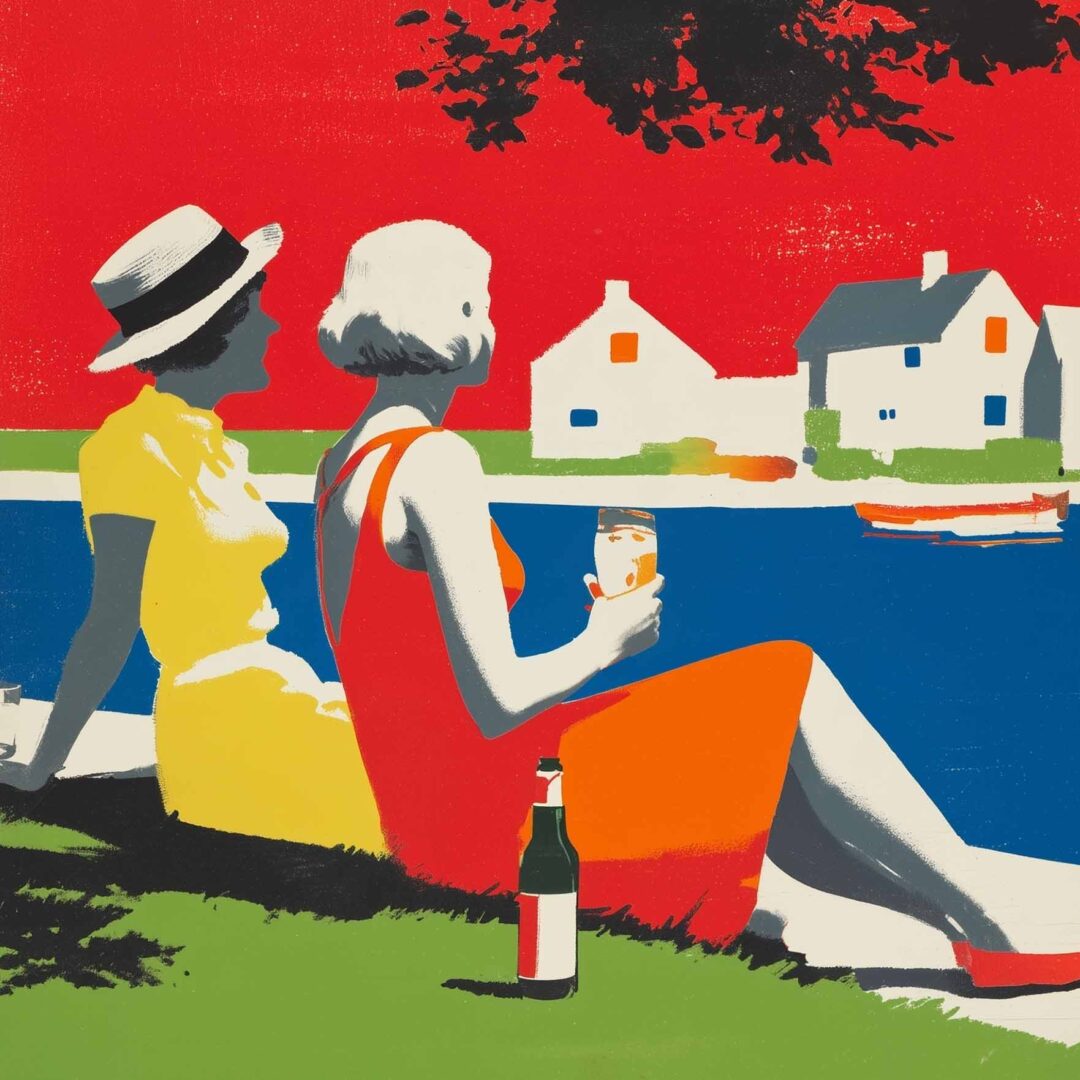
The only exception is spring. This time of year, when the snow is gone and the buds finally start to come out on the trees, an unexpected afternoon of sunshine is a great excuse to toss aside all of your pre-existing plans and go have a beer by the water.
And there is almost always a place to have a beer by the water, wherever you are in Denmark.
The Vikings planned well
But in almost every other context, time structure is very important. The Danes’ passion for planning is natural in a country where for centuries, winter made survival dependent on a good long-term plan. Very little grows in Denmark from November to April.
The Vikings used to do a lot of food preservation to get through it, salting meat and fish, pickling vegetables, and even creating underground refrigerated storage facilities for dairy and cabbage. If you didn’t plan, you didn’t eat.
Why things work well in Denmark
Their descendants are still planning today. And the lack of spontaneity is one of the reasons things work so well in Denmark, that the bus arrives on time more often than not, that the water systems get maintained and updated, that taxes are paid and benefits are paid out.
We recently had a national election in Denmark, and I served as a poll worker in my Copenhagen neighborhood. The organization was breathtaking. Voters came in, handed over their voting card or showed a passport, got a paper ballot, marked it, dropped it in the ballot box, and left – all within 2 or 3 minutes.
I started timing people as they came in the front door, and if they knew who them wanted to vote for, some of them were in and out within one minute.
Later, when it came time to count the votes, a well-planned sorting system meant that my colleagues and I could tally more than 8000 paper ballots in under 3 hours.
Organization. Efficiency. The Danes do it well.
Socialization in structured formats
What they don’t do well is spur-of-the-moment human contact.
I saw online recently that an international father was complaining that his kid couldn’t connect with the other little kids at a Danish playground. His daughter would approach the Danish children, but they didn’t seem interested in joining her on the seesaw or slide.
The Danes in the forum explained to him that spontaneous interaction is just not a thing here, even for small children, and that getting to know each other takes place in structured environments, like a kindergarten.
Booking well in advance
This is maddening when you are new to Denmark and trying to meet people, trying to establish a social circle.
Danes like to get to know each other in a structured setting, teams and projects and interests, which usually involve set-aside times on set-aside days that everyone can agree on and put in their calendar.
Booking generally takes place well in advance, at least 2 or 3 weeks ahead, often longer. The Christmas party is planned in August.
Finding a spontaneous Dane
You can be impulsive in Denmark, you can try talking to strangers, and sometimes they are delighted when you smile and strike up a conversation. Elderly Danes, in particular, like to have somebody to chat with.
But Danes in the prime of their lives may feel they’re too busy for random chatter, that they don’t have time to balance work and family and the hobbies and the friends they already have, let alone make new ones.
Time is the most precious currency in Denmark. It’s also one of the few things the Danish government can’t tax.