Browsing Tag

design

The Danish Brick
Podcasts, Stories about life in Denmark

The Danish brick


If you drive out of Denmark, across the Øresund Bridge into Sweden, you’ll immediately notice two things.

One, there are a lot fewer bicycles, even in big cities like Stockholm and Malmö that have bicycle lanes. Sweden’s more of a car country.

Two, you’ll see small wooden houses all over the countryside, almost always painted red. The red is called Falun Red, and the iron that makes it red was originally a byproduct of the local copper mines.

The wood for the houses comes from Sweden’s big forests.

Denmark doesn’t have many wooden houses. Its forests are small.

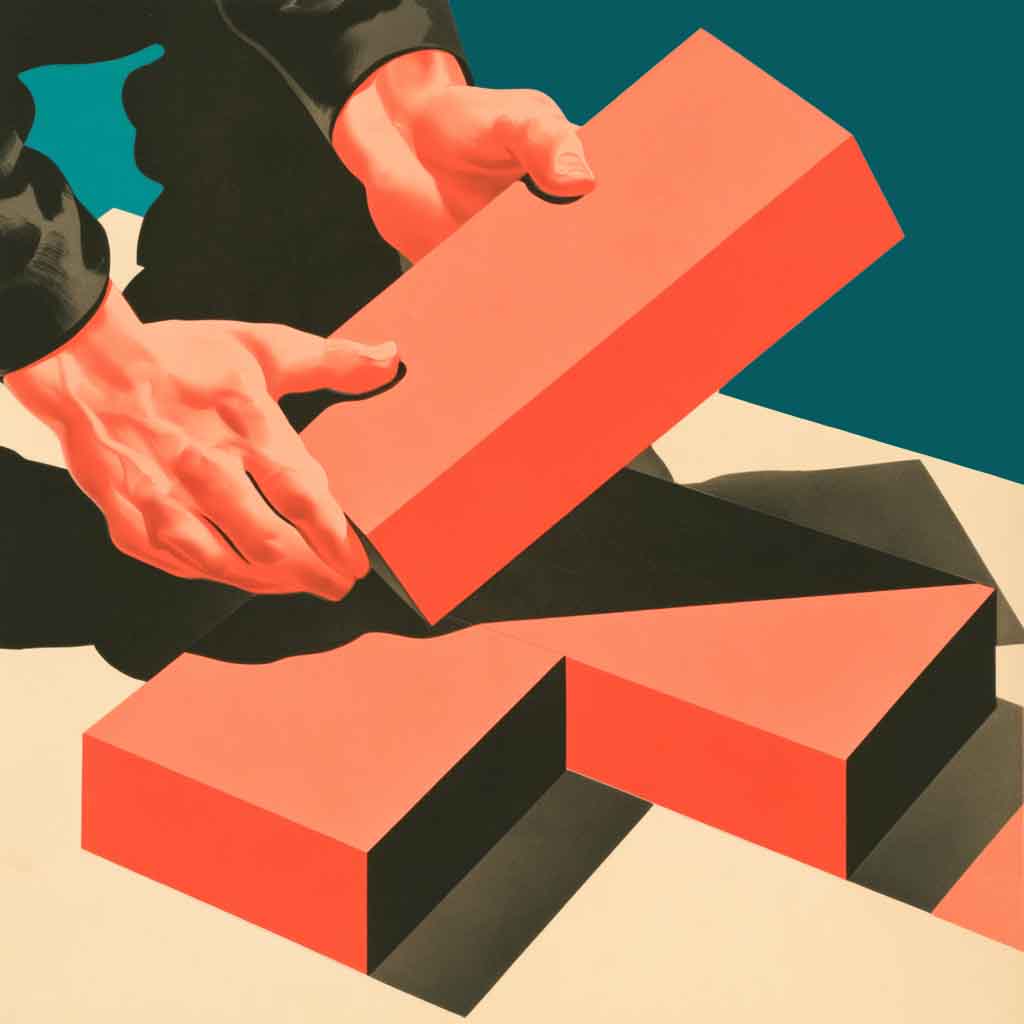
What Denmark has is brick. The Danish brick.

95% of Danish houses have brick facades

About 95% of Danish single-family houses have brick facades, and so do most Danish churches, and schools, and city halls. Sometimes the bricks are hidden behind whitewashing, but they’re still there.

The brick’s only real competition is concrete. The new apartment blocks going up in the trendy cities often have concrete facades, but even there, developers sometimes cover those facades with flat little tiles that look like bricks.

Bricks were known as monk stones

Danish people like bricks.

And this affection goes all the way back to the 12th century, when bricks were known as monk stones, munkesten, because it was primarily monks who made them. Denmark had a lot of cloisters and monasteries at the time.

Munkesten, monk stones, are bigger bricks, almost the size of a shoebox, and they were all made by hand. The monks would press clay into wooden molds and then fire them in kilns fueled by giant stacks of wood.

Bricks nearly a thousand years old

Monk stones are mostly red, from the red clay that is the upper layer of clay in Danish ground.

Red was considered the high-end brick color for centuries.

Ribe Cathedral, in Jutland near Germany has red brick munkesten, and so does Roskilde Cathedral, a UNESCO World Heritage site where Danish monarchs are buried.

The older parts of these buildings are made with red monk bricks that are nearly a thousand years old.

Red brick vs yellow brick

Red brick is not just beautiful. It represents stability, and trust, and prestige.

But Denmark has another type of brick. Yellow brick. The clay comes from a deeper layer underground, and it’s actually grey, but it turns yellow when you fire it.

For many centuries, it was the low-rent brick. If you made yellow bricks, you used them in less-visible parts of the building and put your good red stuff out front.

But around the 1930s, this changed. Architects started to be loud and proud with their yellow brick.

It started with Aarhus University, then in its start-up phase. It needed low-cost buildings. A local brick company offered 1 million yellow bricks free of charge.

The architects accepted. They created a beautiful, cohesive campus with yellow bricks and yellow tiles that is still in use today.

The church with 6 million bricks

At around the same time yellow bricks were used for Grundtvig’s Church, a huge gothic expressionist church on top of Bispebjerg Hill in Copenhagen.

It’s made of almost 6 million yellow bricks.

The altar, the pulpit, the floor, everything’s brick, and a lot of the bricks were hand-sanded to give them a soft, light-reflecting feel. It’s an amazing space.

Mixing red and yellow bricks

Yellow bricks became common for housing projects, and schools, and single-family houses.

Fast forward to the present day, contemporary Danish architects like to mix yellow and red bricks, for example Vejle Fjordenhus, the modern “water castle” in Vejle Fjord (it’s really offices and a restaurant).

Or Bispebjerg Bakke, the undulating ‘snake building’ apartments in Copenhagen Northwest.

Recycling bricks

And it’s become trendy to recycle bricks.

Denmark has at least four big brick libraries. These are private companies that take bricks from buildings that have been torn down for whatever reason, clean them up, and save them to be used in new buildings.

Sometimes builders also just take bricks directly from a demolition site to a construction site.

In my neighborhood, the municipality recently tore down a brick wall around a cemetery, then moved the bricks a couple streets away and used them to build a training center at the local hospital. It looks great.

The Danish Brick example house

Training center made with recycled bricks at Bispebjerg Hospital, Copenhagen

Bricklayer education takes 4-5 years

Denmark recycles bricks not because it is a poor country, but because it is practical country.

Making bricks is not very environmentally friendly, it takes a lot of heat to fire them, but once they’re made, they can be used and re-used almost indefinitely.

This, of course, requires skilled bricklayers, and Denmark has a lot of respect for bricklayers.

The bricklayer education can take 4 to 5 years, including an apprenticeship to a master bricklayer.

Once fully trained, a unionized bricklayer, or mason, makes about $50 an hour working for someone else, or potentially much more when she owns her own business.

Female bricklayer won competition 3 years in a row

I say her own business not because most bricklayers are female, most are not, but because the most famous bricklayer in Denmark is a woman in her twenties.

Gry Astrup Hansen, a fourth-generation mason, won the Danish national bricklaying skills championship three years in a row and competed internationally in bricklaying.

She now owns her own company and advocates for getting more women into the building trades.

Buns are still an equalizer

Denmark needs good bricklayers. It is one of the trades currently on the Danish immigration authority’s Positive List, along with electricians and aircraft technicians.

Having a skill on the positive list makes it easier for non-EU citizens to get a work permit for Denmark, although you still need a job offer from a Danish employer.

Buns are still an equalizer

While Denmark is importing bricklayers, it is exporting bricks, especially to Norway, Sweden, and Germany.

Denmark makes 300 million bricks per year, and it can’t use them all. Exporting bricks is part of exporting Danish design.

And that is why the Danish brick is featured in the Danish Architecture Center’s permanent exhibit So Danish!

I encourage you to go see it and to get the English audio guide. When you turn it on, you may recognize the voice – it’s me.

Podcasts, Stories about life in Denmark

The design quirks of Copenhagen

It’s summertime, the top tourist season in Copenhagen, and the streets and the bike lanes and the harbor boats are full of people from around the world. One of the things they come to look at is Danish design.

I’ve created a new audio tour of Danish design in Copenhagen via Voicemap, but I thought I’d share a few quirks of design in Copenhagen that are not in the tour.

First of all, did you know that Copenhagen has its own color?

It’s called Copenhagen Green, and it’s a dark emerald green, mixed with a fair amount of black. A little like the dark green we see on the leaves of trees here in August. Pantone 3435C, for you designer types.

Green and black blend well

You’ll notice that all Copenhagen benches are this color, and there are thousands of these wood and cast-iron benches around town. They were originally designed more than a hundred years ago by Thorvald Bindesbøll, an art nouveau master also known for the Carlsberg beer label.

You will see Copenhagen Green on many wooden doors and window frames in the old city, as well as lamp posts, railings, even small bridges in the beautiful Ørsteds Park, all painted Copenhagen Green. This was a conscious decision by city leaders in the early 1900s.

They felt the combination of green and black blended well with both natural and urban settings and using it widely would create a sense of harmony. Plus almost everybody likes green.

Continue Reading

Stories about life in Denmark, Travels in Denmark

The Bridges of Denmark

I don’t do a lot of stock market investing, but if I did, I’d want to go back in time and invest in companies that build bridges in Denmark. This country is on a tear when it comes to bridge building. Over the past decade, there have been 5 new major bridges in Copenhagen alone, and at least one new major one is planned.

And because this is Denmark, and people love design, each bridge has its own special look. You can’t just put up a few bridge supports and a deck on top for traffic. You need style, and you need a colorful name.

Consider, for example, the multicolored Kissing Bridge in Copenhagen. It’s not named that because you’re supposed to kiss on the bridge, although you can if you like. It’s named that because it breaks in half on a regular basis to let ships through, and then it’s supposed to come together again like a kiss.

The Kissing Bridge has needed to visit a relationship counselor, however, because there have been constant problems getting it to kiss. It wasn’t quite aligned the way it was supposed to be.

It seems to work now, although it’s rather steep and a difficult ride for bicyclists, which is rather a shame, because it is a bicycle and pedestrian bridge only. There are no cars on it.

Bicycle Snake and Brewing Bridge

The Bicycle Snake and the Brewing Bridge a little further down the harbor are also just for cyclists and walkers, and so is the Little Langebro bridge.

The Little Langebro bridge is currently the newest bridge in town, just a couple of years old. This is a neighborhood I don’t go to often, and I remember coming home from a late night engagement to suddenly find a new bridge in front of me, all lit up and ready to serve.

Whoa! Unexpected bridge. It was like a dream.

Continue Reading

Podcasts, Stories about life in Denmark

Private-equity pastry and the decline of bodegas: How Denmark is changing


I help out at a flea market sometimes near Copenhagen, a flea market that’s held a few times a year to benefit my daughter’s marching band. We sell things people have sent for recycling – at the local recycling center, you can put things that are still useful in a special room, and then community groups sort through those things and sell them to raise money.

We have one persistent problem: too many shotglasses. Each new week brings dozens of beautiful crystal shotglasses, prized for a lifetime by someone from the older generation, perhaps now the dead generation. These people to used to drink clear snaps before fancy Easter lunches, and or a dark bitter alcohol called Gammel Dansk before breakfast.

People in Denmark don’t do that much any more. They go jogging before breakfast and drink wine for holiday lunches, if they drink anything.

And most young people already have a set of grandpa’s old shotglasses gathering dust somewhere at the back of a cabinet, and they don’t need any more.

So week after week, these lovely little etched crystal glasses line up like fragile soldiers on the storage shelves at the flea market. Nobody needs them, nobody buys them, but we just don’t have the heart to throw them out.

Continue Reading

Podcasts, Stories about life in Denmark

Danish Design: From spaceship toilets to thieves that steal chairs

When I first visited Denmark, back in my Eurail pass days, I didn’t like it much. Copenhagen was very different in those days: less prosperous, less open, less social.

There were few cafés then, and I had a lot of trouble finding something to eat. I walked and walked and ended up in the coffee shop at the SAS Radisson Hotel, a big 1970s concrete block on Amager.

Anyway, I took only one picture that day, and it was of a toilet at the hotel. It was the most beautifully designed toilet I had ever seen. All round, streamlined corners. It looked like a cross between an egg and a spaceship. I was really impressed. I took a picture.

I didn’t know it then, but I’d just seen my first example of local Danish design.

Continue Reading

Stories about life in Denmark

Danes and Fashion: All the colors of the Danish landscape

I can’t remember exactly what the social occasion was, but when I was fairly new to Copenhagen I met a man who was a refugee from a country in Sub-Saharan Africa. He had escaped his homeland – I also can’t quite remember which country that was – by way of Cairo, Egypt, and ended up in Denmark.

What I do remember is his account of what it was like to come to Copenhagen after living in busy, colorful city like Cairo. He asked another refugee, a guy who’d been here longer, to show him downtown Copenhagen.

The guy drove him to, I don’t know, Gammel Strand on a Tuesday night in February, and there was no one there. All the Danes were home enjoying their hygge, and the streets were dark and empty. My friend got very angry at the other refugee. Said he’d tricked him. Where is the city! This is not the city! he said. But it was.

The same grey sweater
Anyway, I also remember this African refugee’s comments about Danish fashion. He said he had trouble shopping here, because Danish clothes all look alike. He said, Every store you go to, it’s got same grey sweater.

Now, that’s not entirely true. You could also find a navy blue sweater. I’ve even seen green sweaters.

Continue Reading